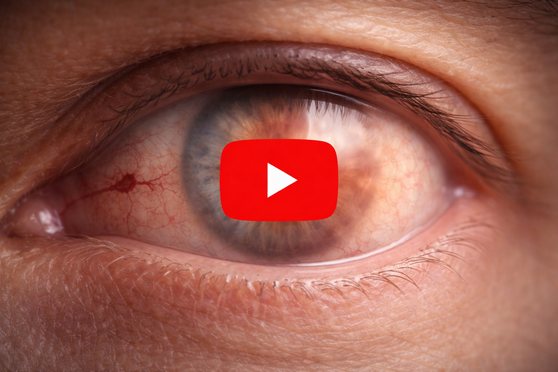
IT'S NOT AGE. IT'S A CLOUDY LENS.
You have a clear lens behind each pupil. It focuses light the way a camera lens does. When that lens turns cloudy, doctors call it a cataract. Three facts explain why the glare deserves a visit.
01 / It starts earlier than you think
Mayo Clinic says aging changes the tissue of the lens. Its proteins and fibers break down, and the lens slowly clouds. Cedars-Sinai says most cataracts are age-related and can begin as early as 40. By age 80, more than half of all Americans have a cataract or have had surgery for one, according to the National Library of Medicine.
02 / Night glare is a common early sign
Cedars-Sinai lists halos and starbursts around headlights and streetlamps as a classic sign. Mayo Clinic adds trouble seeing at night, faded colors, double vision in one eye, and frequent changes in your glasses prescription. A cataract also grows slowly, so many people do not notice it right away. In other words, the road may tell you before your mirror does.
03 / Fixing it may make the road safer
Cedars-Sinai says cataract surgery takes about 15 minutes. The surgeon removes the cloudy lens and puts in a clear artificial one. In a Western Australian study of 2,849 drivers aged 60 and older, crashes fell by 61 percent after surgery on the first eye. A Canadian study of more than 500,000 older patients also found fewer crashes after surgery.
|